


This is my fresh and vibrant pea pesto, my twist on traditional pesto. I add spinach and kale for extra goodness, although they aren’t essential to the recipe. The capers add a lovely tang, while lime gives a little more zing than the lemon traditionally used in pesto. I use cashews rather than pine nuts because they blend into an especially creamy pesto. A touch of chilli is optional, but I think it really brings the flavours together.
I love how versatile this pea pesto is. It’s delicious stirred through pasta or risotto, spooned over salads, spread onto rye crackers or used as the flavourful base for my [Minestrone Verde with Pea Pesto]. It’s also a great way to use up any green vegetables you have in the fridge.
- 100g frozen peas
- 2 large cloves of garlic
- 50g kale
- 50g spinach
- 1 tbsp. capers
- 80g cashew nuts
- handful of basil leaves
- 60g grated parmesan
- 1 lime
- 3 tbsp. extra virgin olive oil
- S&P
- 1/4 tsp chilli flakes (optional)
- Simply place all the ingredients into a blender or smoothie maker and blend until smooth and creamy.
- Taste for seasoning, then use in pasta, risottos, salads or even spread onto rye crackers.
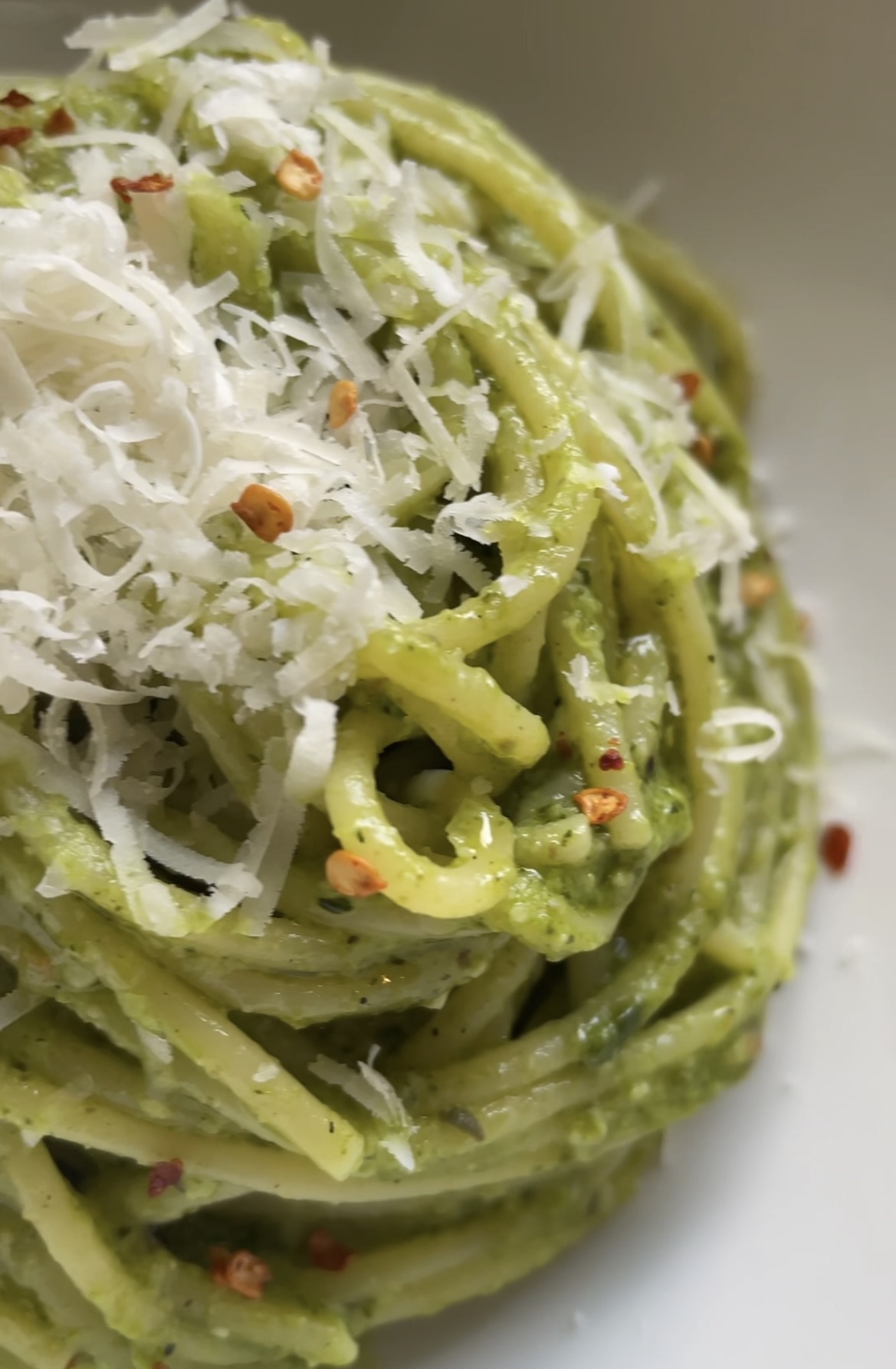
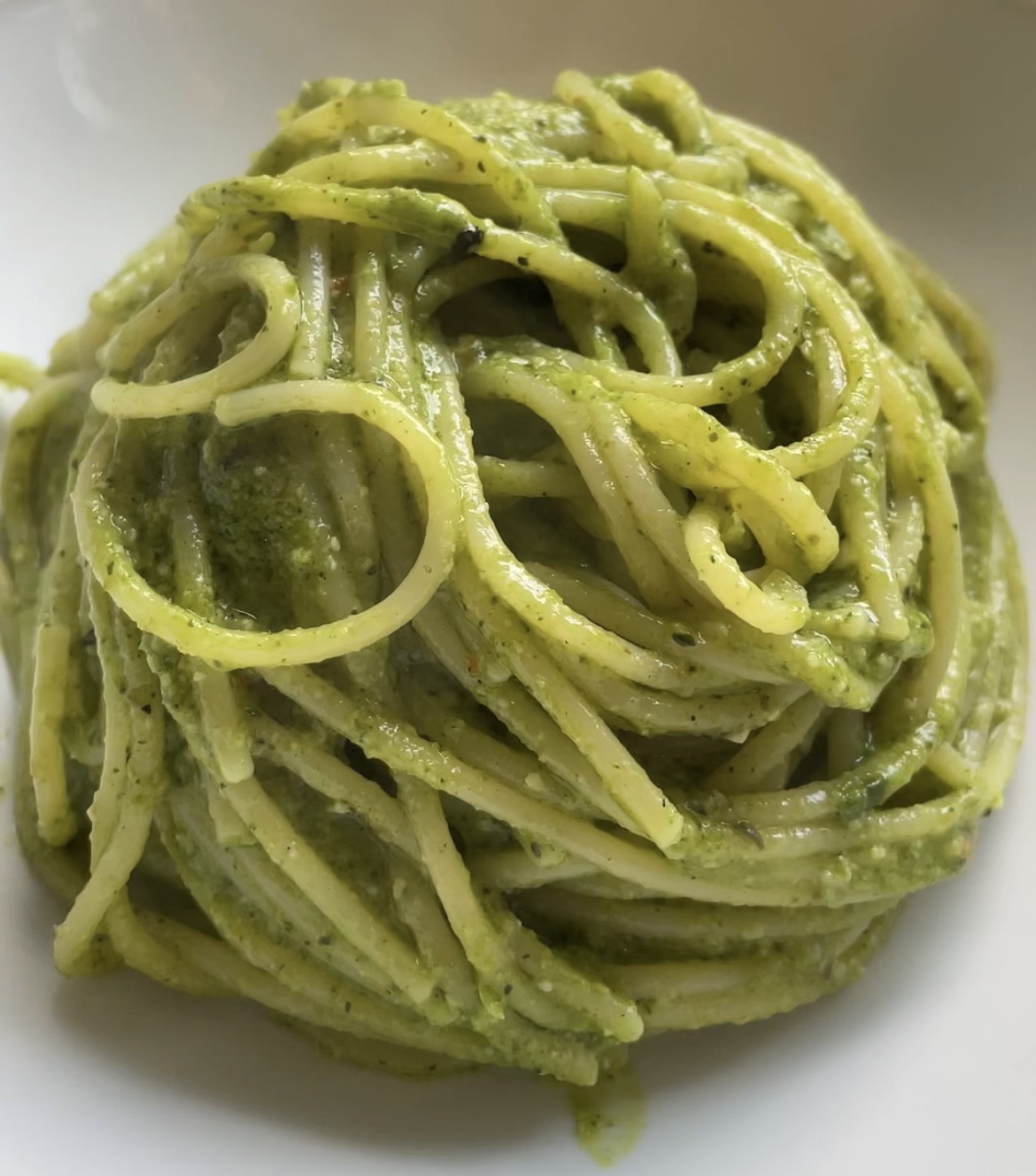
- To make with spaghetti, add a couple of heaped spoonfuls of pesto to a pan and warm gently. Add some of the hot pasta water to create a creamy sauce, then stir through the cooked al dente spaghetti.
LULU’S NOTES
PEA PESTO INGREDIENTS
You can make lots of variations of this pesto. The nuts can be swapped for pine nuts, which are more traditional for pesto, and you can change the vegetables depending on what you have that needs using. As long as you have peas, a nut, a citrus, a herb and a cheesy component, you can play around with the flavours.
VEGETARIAN / VEGAN?
This is easily made into a vegan pesto. Simply remove the Parmesan and swap it for nutritional yeast, which adds a lovely cheesy flavour. I sometimes add nutritional yeast anyway, even when using Parmesan.
MAKING AHEAD
You can make a batch and store it in the fridge for 3–5 days. Drizzle a little extra olive oil over the top before sealing in an airtight jar. This will help stop the pesto from turning brown.